


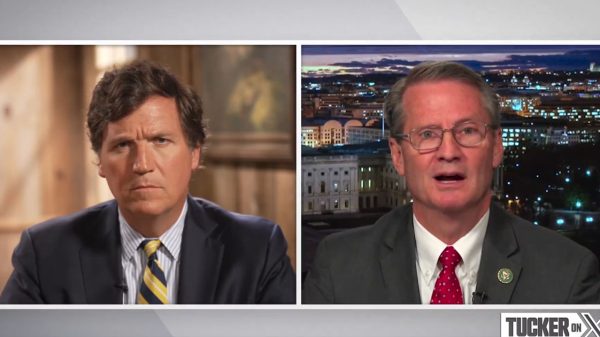



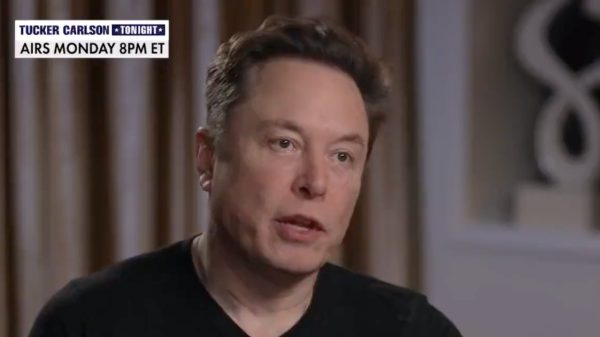

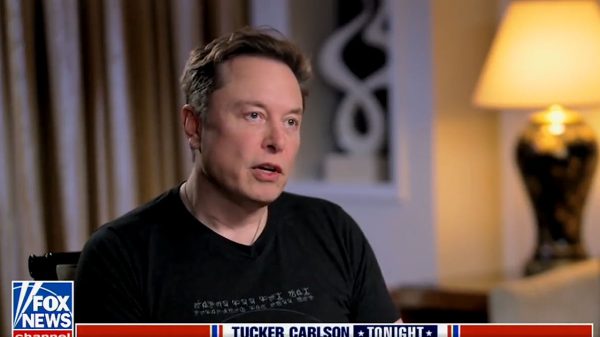
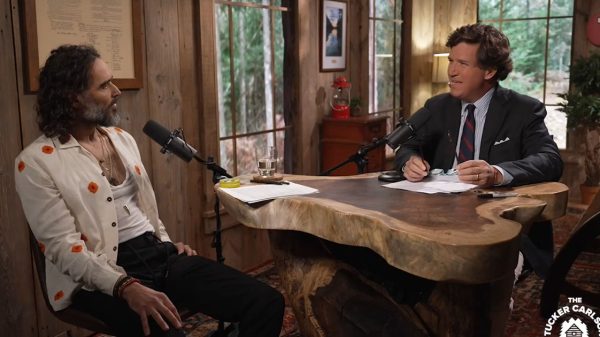






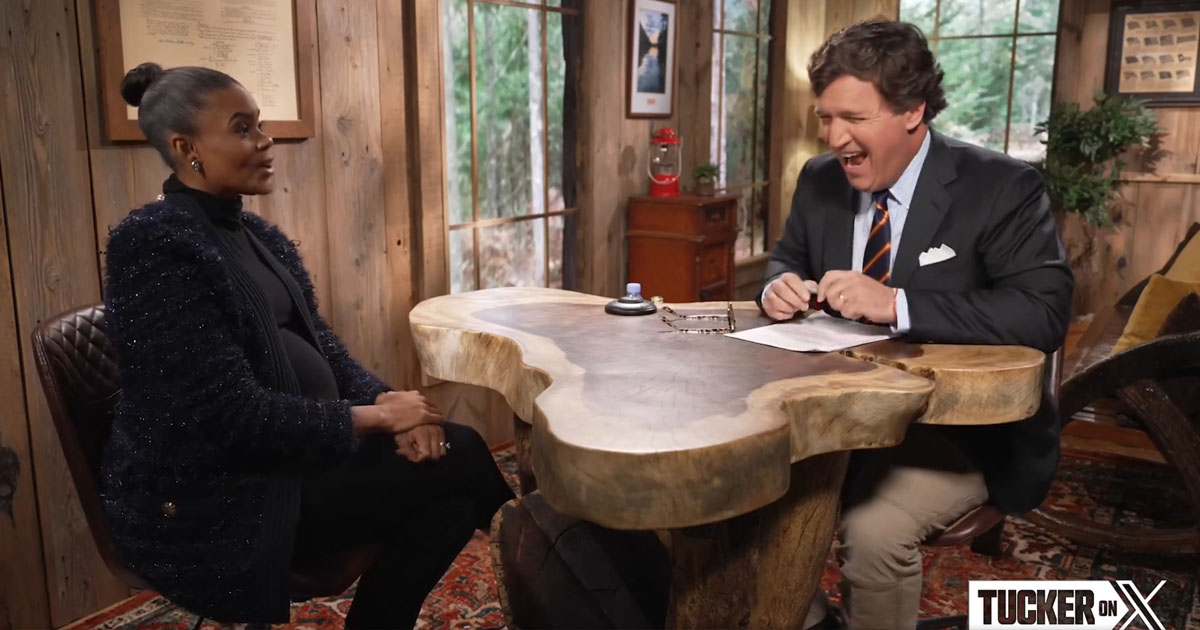

In a much-anticipated interview on Wednesday evening, Fox News host Tucker Carlson sat down with conservative commentator Candace Owens to discuss the recent onslaught of criticism she has been facing from the left-wing media and her own boss at The Daily Wire, Ben Shapiro.
The interview, broadcasted on Carlson’s prime-time show “Tucker Carlson Tonight,” provided an opportunity for Owens to address the controversies that have been surrounding her in recent weeks. The discussion touched upon a wide range of topics, including Owens’ ideological differences with Shapiro, a prominent neoconservative voice.
Ep. 39 Candace Owens responds to Ben Shapiro.
TIMESTAMPS:
(00:00) Candace is attacked – even when she’s right
(4:27) Ben Shapiro’s comments
(12:50) The emotional response to news out of Israel
(23:05) Nikki Haley vs. free speech
(30:34) 2024 predictions pic.twitter.com/VOThqpQQ48— Tucker Carlson (@TuckerCarlson) November 15, 2023
News of the interview was first announced by Owens herself amidst a public feud with Shapiro, as reported by Mediaite. This announcement further fueled the anticipation for the conversation between two of the most influential conservative voices in America today.
During the interview, Owens expressed her views on the attacks she has been facing from various quarters. She questioned the danger posed by a black woman promoting independent thought within the black community, a sentiment she earlier voiced on “Fox & Friends.”
They also discussed Nikki Haley’s crusade against online anonymity and free speech, as first reported by Valiant News.
The outspoken conservative commentator has frequently found herself at the center of controversy due to her provocative views, making headlines on numerous occasions. However, her recent public disagreement with Shapiro has drawn particular attention, bringing internal divisions within conservative circles into the spotlight.
The Carlson-Owens interview offers a glimpse into the ongoing debates within the conservative movement, highlighting the tension between different factions and ideological perspectives. As these discussions continue to unfold, they are likely to shape the future direction of conservative thought in America.