



























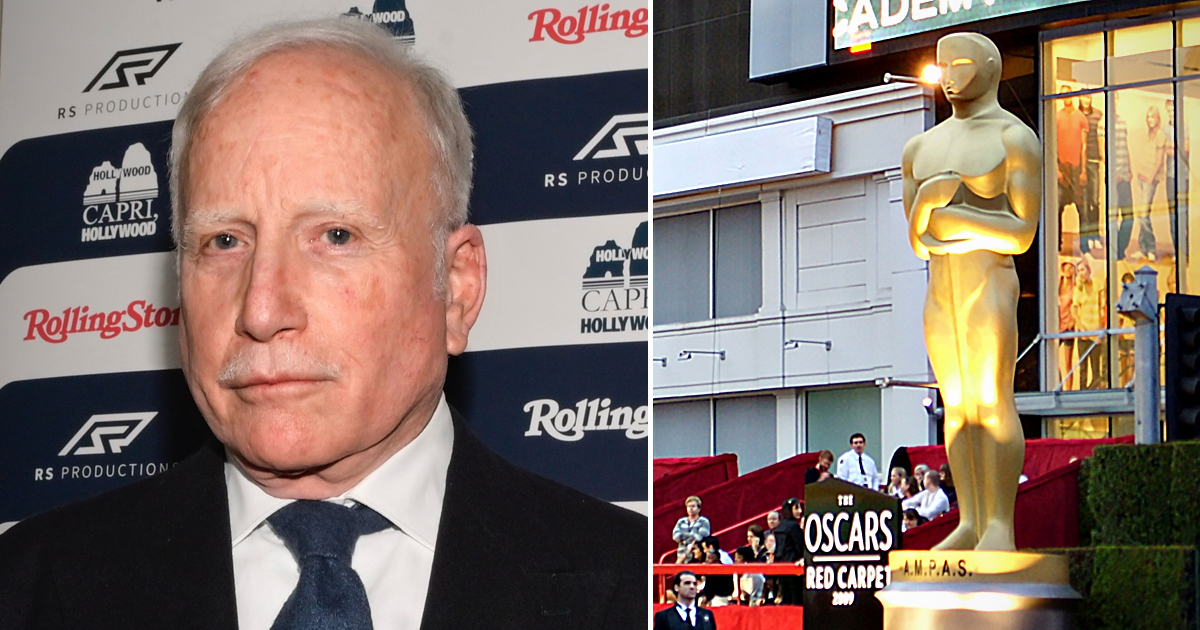

Actor Richard Dreyfuss has spoken out against the Oscars’ new diversity rules, stating that they “make me vomit.”
Dreyfuss, who made his acting debut in the late 1960s and subsequently gained recognition for his performances in popular films such as “American Graffiti,” “Jaws,” and “Close Encounters of the Third Kind,” made the remarks during an appearance on PBS’ “Firing Line with Margaret Hoover,” arguing that the rules go against the very nature of art.
“Because this is an art form,” Dreyfuss said. “It’s also a form of commerce and it makes money,” he explained, “But it’s an art. And no one should be telling me as an artist that I have to give into the latest, most current idea of what morality is.”
Dreyfuss went on to express his dissatisfaction with the idea that certain groups should be catered to.
“I don’t think that there is a minority or a majority in this country that has to be catered to like that,” he said. “Am I being told that I will never have a chance to play a Black man? Is someone else being told that if they’re not Jewish they shouldn’t play the Merchant of Venice? Are we crazy? Do we not know that art is art?”
Actor Richard Dreyfuss said the Academy Awards' new diversity guidelines "make me vomit." https://t.co/EeaiWHXvoR
— CNN (@CNN) May 8, 2023
The new Oscars diversity rules – established in 2020 and set to take effect next year – require films to meet certain inclusion standards in order to be eligible for the Best Picture award. The rules require films to cast minority actors in lead roles or prove that 30% of a film’s crew are minorities.
Dreyfuss, however, sees these rules as a form of censorship on the artistic freedom of filmmakers and actors, and believes the new rules send the wrong message.
The veteran actor received push back from Hoover, who questioned whether there is “a difference between the question of representation and who is allowed to represent other groups … and the case of blackface, given the history of slavery and the sensitives around black racism?”
“There shouldn’t be,” said Dreyfuss. “Because it’s patronizing,” he added. “Because it says that we’re so fragile that we can’t have our feelings hurt.”
While Dreyfuss’s comments have sparked controversy, they also reflect a broader debate over the role of diversity and inclusion in the arts. Some argue that diversity is necessary to accurately reflect the wider world and ensure that stories are told from a variety of perspectives. Others, like Dreyfuss, feel that art should be free to explore any subject matter or character regardless of identity.