































Democrats previously introduced legislation aimed at removing police officers – generally known as Student Resource Officers – from public schools during the “defund the police” wave that spread in 2020 following the death of George Floyd.
Sens. Elizabeth Warren and Chris Murphy and Reps. Ilhan Omar and Ayanna Pressley introduced the “Counseling Not Criminalization in Schools Act.”
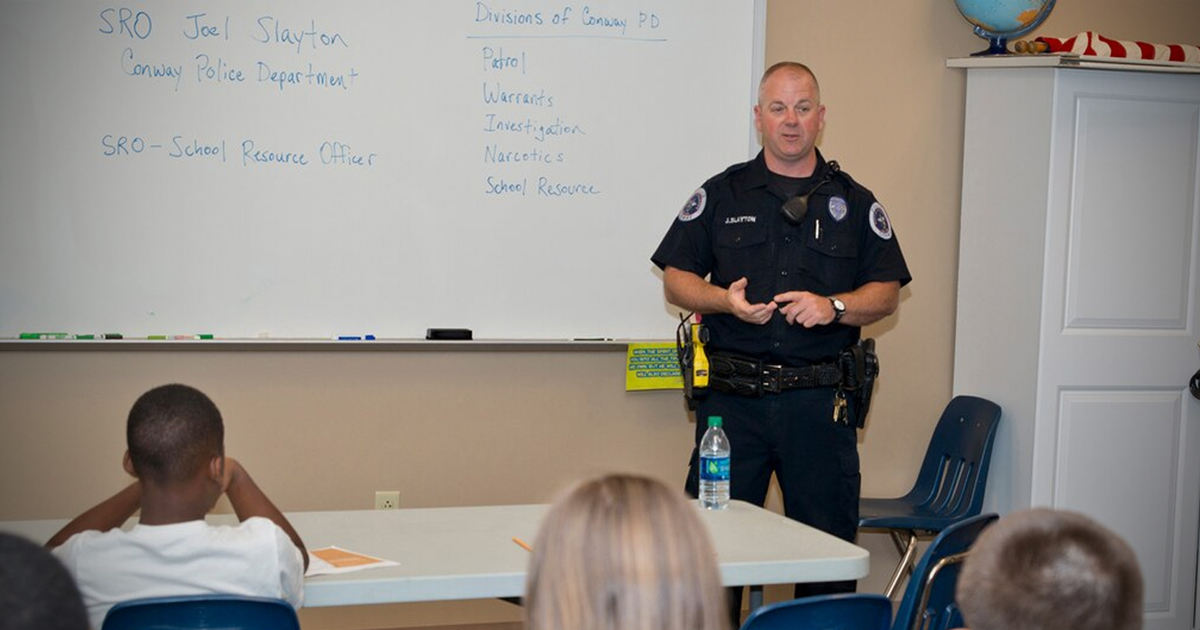
The bill was meant to remove the more than 10,000 police officers from schools across the United States based on the claim that these police officers arrest students “for minor things,” thus introducing them to the “juvenile justice system at an early” age.
In a press release still available on Murphy’s website, he stated that “police shouldn’t be in schools.”
“If we are going to begin to tackle systemic racism in this country, we must start by addressing the racial inequities in our education system, and getting police out of classrooms is a necessary first step,” Murphy added.
Murphy, a Democrat who represents Connecticut in the U.S. Senate, noted that some parents find police officers at schools comforting following the horrific Sandy Hook school shooting. Murphy dismissed this.
“We have plenty of evidence to show that there are far better ways to ensure kids’ safety,” he claimed before charging that “these police officers are contributing to a civil rights crisis that we must address.”
In a sparely viewed video uncovered by The Gateway Pundit, local news attempted to explain the bill as an effort to “divert” federal money to different uses within schools.
Although the “defund the police” movement appears to have lost its momentum, with Democrats now claiming Republicans do not adequately support police over concerns regarding the Department of Justice’s prosecution of hundreds of January 6 prisoners, the bill was reintroduced just last year.
Congressional records reveal that Murphy introduced the bill in the U.S. Senate on June 17, 2021.
It aimed to “divert Federal funding away from supporting the presence of police in schools and toward evidence-based and trauma informed services that address the needs of marginalized students and improve academic outcomes, and for other purposes.”
The bill was referred to the Senate Health, Education, Labor, and Pensions committee but was not advanced.