


























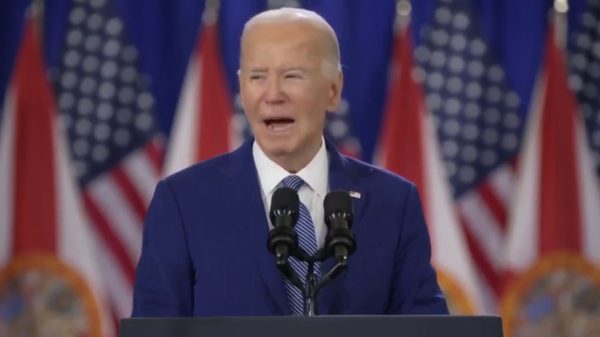

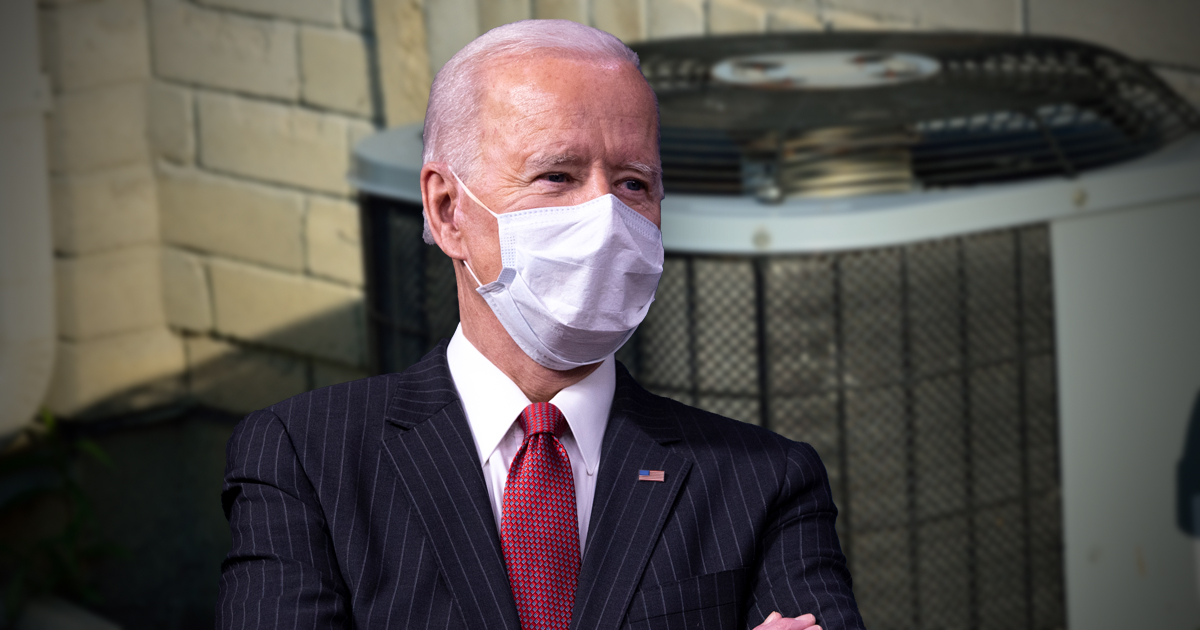

Energy Star, a federal program from the U.S. Department of Energy and the U.S. Environmental Protection Agency, is recommending Americans set their thermostat a little higher this year to offset rising energy costs and lower the environmental impact of cooling.
According to the government program, Americans should set their thermostat to 78 degrees when they wake up in the morning and expect to be home.
When Americans go to bed, Energy Star says they should adjust the thermostat up to a warm 82 degrees.
If away from home, Energy Star says Americans should set the thermostat to 85 degrees.
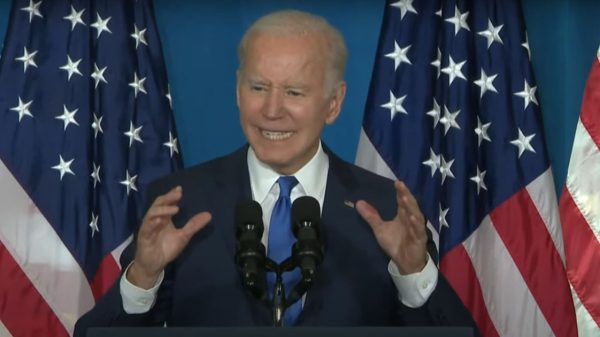
According to a 2015 survey covered by Bloomberg, very few Americans are likely to follow the Biden administration’s recommendations as summer approaches.
7 years ago, at least, Americans expected their air conditioners to cool their homes into the low 70s or even the high 60s over warm months.
19.4% of Americans cooled their homes to 69 degrees or less, while 16.9% went for 70 degrees, 19.9% of Americans settled for 71-73 degrees, and 25.6% of Americans picked 74-65 degrees.
Only 12.6% of Americans were willing to settle for 77-79, and only 5.5% of Americans admitted to setting their thermostat to 80 degrees or higher.
Almost 90% of Americans have air conditioning units installed, with the majority being central heating and air conditioning systems, with a minority using window units.
The survey also found that heating generally requires greater energy use than air conditioning, and that air conditioning is most common in humid or hot climates. However, summer usually sees a 22% spike in energy consumption in the United States each year.
Meanwhile, the Biden administration is also predicting rising energy costs as the federal government forces states to become more reliant on renewable energy. Biden has slashed plans to increase domestic oil drilling and coal mining, even as the Russia-Ukraine war has left much of the West unable to buy from Russia.