

























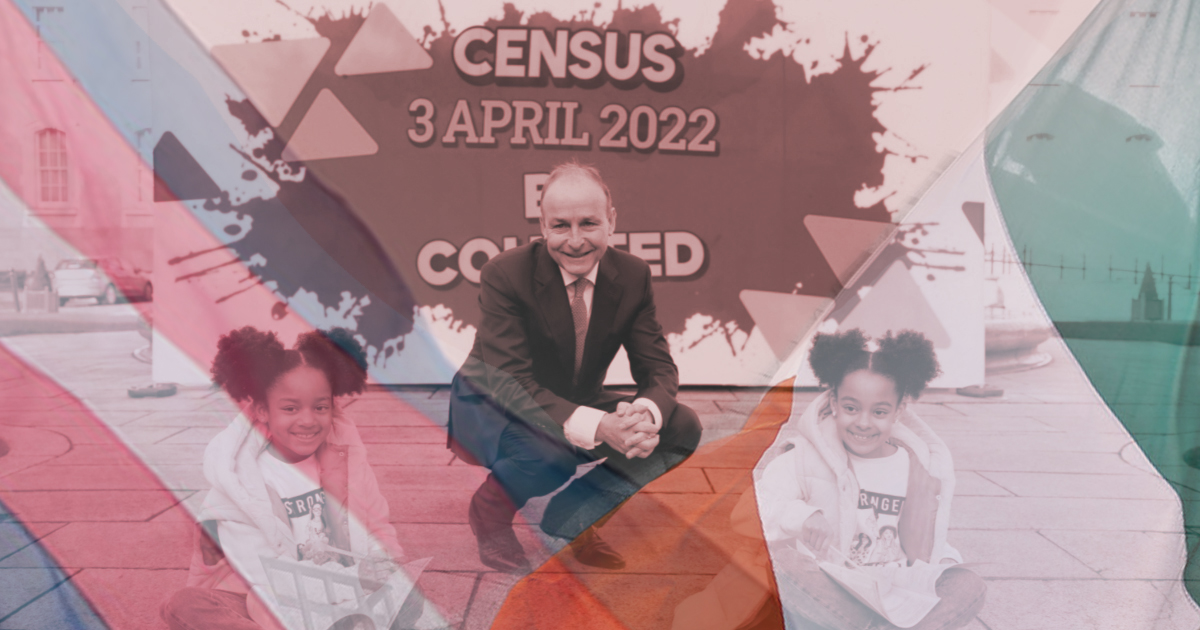

With the 2022 Irish census not requiring citizens to say whether they are a biological male or female, the country’s Central Statistics Office has announced that it will assign those who decide not to respond a biological sex on a completely random basis. The move is meant to help transgender people.
On a section of the census website designed to help people fill out the forms correctly, the Irish CSO notes that for some people, it may be an “uncomfortable” feeling to have to identify their biological sex, and explains that anyone not willing to tick one of the male or female boxes would be able to tick both.
“However, for statistical analysis purposes all entries will be assigned a sex, where this is not clearly indicated on a Census form it will be assigned at random,” the census website confirms.
A spokeswoman for the CSO told the Irish Times that there would be no statistical impact from the random sex allocation.
The section on biological sex is required by European Union legislation, which also dictates that the only answers provided by the census are male and female, and is key when analysing the data from the Irish census as a result.
“This information helps us to understand the changing roles of males and females in households, communities, and workplaces,” the CSO writes.
#Census2022 will take place on April 3rd and we were delighted to support @CensusIreland at the launch today with @MichealMartinTD pic.twitter.com/gzD5XAFMuG
— MKC Communications (@MKCComm) March 3, 2022
The CSO added that they recognise “the importance of accounting for gender identity as distinct from sex,” a fact that is still widely disputed, and confirmed that while there is no question regarding gender identity on the 2022 census, they are “actively” working on surveys to craft a gender identity question ready in time to implement for the next census in 2027.
It is unclear as to whether the CSO was instructing people to commit an offence by ticking both sex boxes.
According to Section 43 of the Statistics Act 1993, it is an offence for anyone to knowingly provide false information on the census.
Many people online were confused by the decision of the CSO, saying that it was proof that Ireland has “lost the plot,” and criticising them for making the census data impossible to verify in future.
Are countries daring each other to come up with the most unreliable census data possible?
— The Cat From Mars #FBPE #Rejoin Answers to Puss. (@TheCatFromMars) March 14, 2022
Hang on a second, the census says if you're "uncomfortable" thinking about the statistics the Central Statistics Office are tasked with collecting then you can just not bother?
Are they the Central Guesstimate Office?— Geraldine Halpin (@HalpinGeraldine) March 10, 2022
https://twitter.com/JeanneDeauxSays/status/1502443646104260610
One transgender activist was under the impression that the question “what is your sex,” did not refer to biological sex, and blamed poor journalism for the supposed confusion.
The census doesn’t actually include a question on biological sex, this is from bad Irish Times reporting but unfortunately it only includes a binary choice . People do not need to select their assigned sex at birth https://t.co/YfYGHVXFe3
— Brian (@spoonitoria) March 14, 2022